30 Day Free Trial - MarketWatch Retirement Weekly
The Perth Mint Australia
 

Lincoln Pennies Should Be Melted; Forget the 5 Years in Jail

AnswerTips   

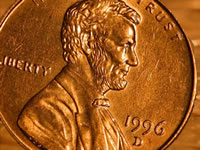
Pennies could be melted once again for their composition value, if a lawmaker has his waySo says Democrat Congressman Zack Space of Ohio who’s trying to help a company within his district. The company, Jackson Metals, would melt pennies for their copper content.

Helping businesses is hard to fault. But is newly proposed legislation that would benefit companies like Jackson Metals and change coinage laws the right thing to do? What would Jackson Metals, Rep. Space, the government and taxpayers really get from it?

First, some history…

The ban on melting 1-cent and 5-cent coins

The U.S. Treasury implemented a ban on melting 1-cent and 5-cent coins that went into effect in April of 2007.

Why the ban? It’s no longer "cheap" to make small change. With the higher copper prices, the estimated cost for producing a single penny hovers around 1.7 cents.

According to a statement at the time by United States Mint Director Edmund Moy,

“The new rule safeguards the integrity of U.S. coinage and protects taxpayers from bearing the costs to replace coins withdrawn from circulation.”

Violating the ban gets more than a small slap in the face. It can lead up to a $10,000 fine and 5 years in prison.

New legislation, H.R. 3956, attempts to straighten everything out

Throw in H.R. 3956, a newly introduced bill by Mr. Space. First, it contains the language of an older bill, H.R. 3330, which would give the U.S. Treasury the authority to change the metal composition of coinage.

That’s something the Treasury and U.S. Mint wants. Without having to go through congress, the Mint could use different metals to produce penny and nickel coins that once again made money. Taxpayers would save as well.

The second part of the bill adds provisions that would help those who would melt coins. A section states:

"…The Secretary of the Treasury shall have no authority to prescribe any regulations under section 5111(d) of title 31, United States Code, that would limit or prohibit the export, melting, or treatment of the 1-cent coin… "

If coins are removed from circulation that would have to replaced, it’s difficult to see any positive merits to this part of the bill. That is, outside the direct beneficiaries of it.

And here’s the kicker… How can anyone mentally picture a person getting sent to prison for 5 years one day and then the very next day make money… It doesn’t sit right.

Either the government was outrageously absurd in the regulatory ban and need for it, or there’s true merit for it and midnight legislating should slow down.

The good news? A slow down is indeed in the works. Hearings on the bill have been scheduled for this week.

For whatever it’s worth, is the bill living up to its name, Coin Modernization and Taxpayer Savings Act of 2007?

Perhaps that’s the largest point of amusement in all this.

First, melting coins doesn’t naturally illicit a thought process of modernization.

Secondly, had the cost for taxpayers truly been respected, coin composition changes could have been recommended or at least planned long before now. It has been, after all, more than a year since the government’s known they’ve been losing money with the penny and nickel.


Related News

  • Malaysia Abandons One Sen Coins - Should U.S. Follow Suite with Lincoln Penny?
  • Nothing New for Penny and Nickel
  • Eliminate the U.S. Penny?
  • Lincoln Portrait Made by Father and Son Using 2,400 Pennies
  • Large Copper Penny Lifted from High School
  • Top Coin News: U.S. Coin Stories by Non Numismatic Publications or Media
  • Reintroduced House Bill Seeks to Change the Composition of Metals in Coins
  • Fake £1 Coins Gets London Counterfeiter 5 Years in Jail
  • The Penny Debate Continues - Why Keep It?
  • One Hundred Million Pennies Photographed: The Penny Harvest Field
  • Article Tags: .


    Email this Article Email this Article                  Print this Article Print this Article


    8 Comments:

    1. Nothing New for Penny and Nickel - House Debate for HR 3956 at a Standstill says:

      [...] had its own article on the topic and, like other news organizations, coin collectors and bloggers, everyone was interestingly [...]

    2. Copper Values Hit 7-Month Low - Theft on the Rise says:

      [...] ban on melting pennies and its copper and the new legislation to remove it is one thing. That should sort itself [...]

    3. Malaysia Abandons One Sen Coins - Should U.S. Follow Suite with Lincoln Penny? says:

      [...] the U.S. is considering metal composition changes to reduce the penny cost and is ramping up a Lincoln commemorative coin program starting in 2009, [...]

    4. Eliminate the U.S. Penny? - Other Stories from Around the World Regarding Small Change says:

      [...] with no clear direction for its smallest coin. Some say there are too many pennies and want to melt them for their copper value while others want to protect them. Some want to eliminate the penny [...]

    5. Ethan says:

      Why would anybody want to go into business melting down pennies for their copper? Most of the pennies in circulation today were minted after 1983, when their composition was changed from 95% copper, 5% zinc to the current 97.5% zinc, 2.5% copper. Since each coin weighs only 2.5 grams, that means today’s pennies are merely copper-plated zinc with 0.0625 grams of copper per coin. That means you would need approximately 7257 pennies (yes, $72.57 worth) to get 1 pound of copper. You still have to melt them down and separate the copper from the zinc. And zinc is currently selling for around 1/4th the price of copper. Sounds like a political stunt to me, or perhaps just plain stupidity or lack of understanding; I don’t think much of politicians.

    6. Charles M. Barnard says:

      Given that the US Government is barred from creating ANY currency which is not made of gold or silver, none of the currency, nor rules about what you can do with it are legal.

      Still, I don’t think that melting 1 & 5 cent pieces, even older ones, is worthwhile. Older coins will usually have value to collectors.

      Probably, the rule is yet another silly rule passed to direct attention away from something else which they are doing.

      Manufacturing them out of plastic is a good switch, as would doing so for paper bills. They last longer and have essentially no value in and of themselves.

      There is a an argument for even smaller values, as electronically transmitted intellectual property could be profitable at extremely low prices, should the transaction costs charged by the financial industry be more reasonable.

      But if I find myself destitute, I will certainly make a point of videotaping myself melting coins in front of treasury officers–5 years in prison might be an improvement over starving on the streets.

    7. Charles M. Barnard says:

      “And here’s the kicker… How can anyone mentally picture a person getting sent to prison for 5 years one day and then the very next day make money… It doesn’t sit right.”

      You’ve got ME confused. “…then the very next day make money…”

      Where and how do they ‘make money’ the very next day?

    8. Ethan says:

      “And here’s the kicker…” That kind of confused me too. I suspect that thought didn’t fully make it into print.

      As for the currency issue, the US Constitution (which is the basis for all federal law, or is supposed to be at least) says in article 1 section 8 that Congress can coin money and regulate its value, but it doesn’t state what materials may be used. However, it specifically says “coin”, and doesn’t allow for printing paper money, and that was by design (see http://www.usconstitution.net/constfaq_a8.html#Q154). Original paper money could be redeemed for coin. It seems that the Supremes decided in 1871 that paper money was okay, because they said so (law out of thin air, basically.)

      On the other hand, it is totally legal for regular Americans to print money and mint coins, so long as we don’t copy the current design of US coin. Getting other people to accept your unique currency though is another story… bet you could do it with gold and silver though! Also, note that it’s legal to recreate old designs, at least according to the constitution. And since the government is not authorized to print paper money, it seems they should not be able to stop people from printing their own “Federal Reserve Notes” just as the Feds do! ;)

    Post a comment:

    Comments are moderated, and will not appear until an editor has approved them. (After you click to post your message, just leave this page.)