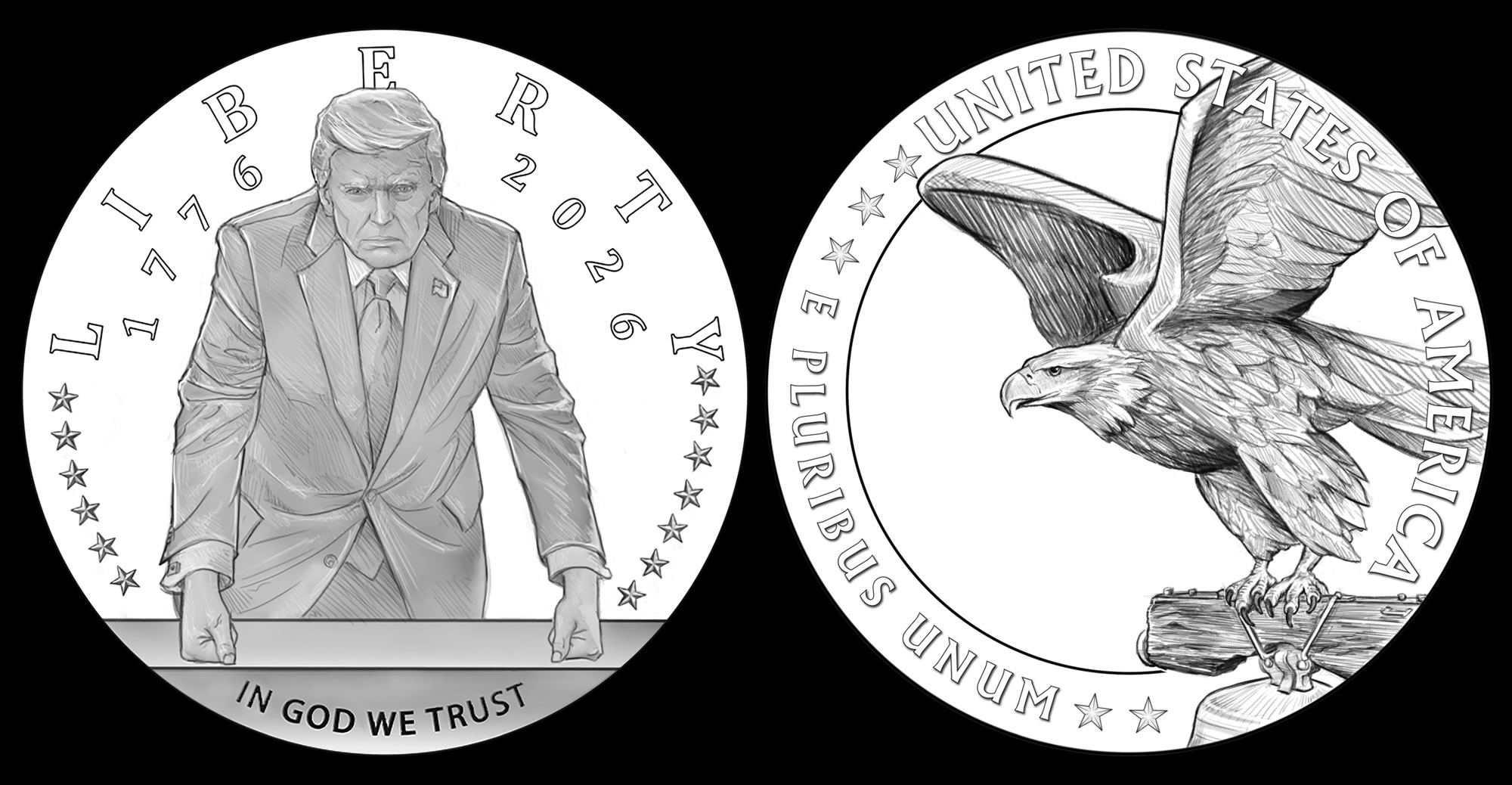
A design for a 24-karat 2026 gold coin featuring President Donald Trump — potentially larger than one ounce — has been approved by the U.S. Commission of Fine Arts (CFA). The federal panel reviews and recommends designs for coins and other federal works, advancing the proposal as part of the nation’s Semiquincentennial coinage program.
The development follows activity tied to 2026 issues, including candidate designs for a clad $1 coin depicting President Trump that were reviewed and recommended earlier this year.
"As we approach our 250th birthday, we are thrilled to prepare coins that represent the enduring spirit of our country and democracy, and there is no profile more emblematic for the front of such coins than that of our serving President, Donald J. Trump," U.S. Treasurer Brandon Beach said in a statement.
CFA Recommends Trump Gold Coin Design
During its March 19 meeting, the CFA reviewed and approved the proposed designs, marking a key step in the coin’s development.
Similar to a photograph of President Donald Trump taken by official White House photographer Daniel Torok, the obverse (heads) features a portrait of Trump with the inscription LIBERTY, along with IN GOD WE TRUST and the dual date 1776–2026. The reverse (tails) depicts a bald eagle in flight with UNITED STATES OF AMERICA and E PLURIBUS UNUM.
As with other U.S. coinage, the CFA’s role is advisory, with final approval authority resting with the Secretary of the Treasury.
Part of Broader 2026 Semiquincentennial Coinage
The proposed gold coin would be issued as part of the United States’ 250th anniversary in 2026, alongside circulating and collector coins bearing one-year-only designs and dual dating.
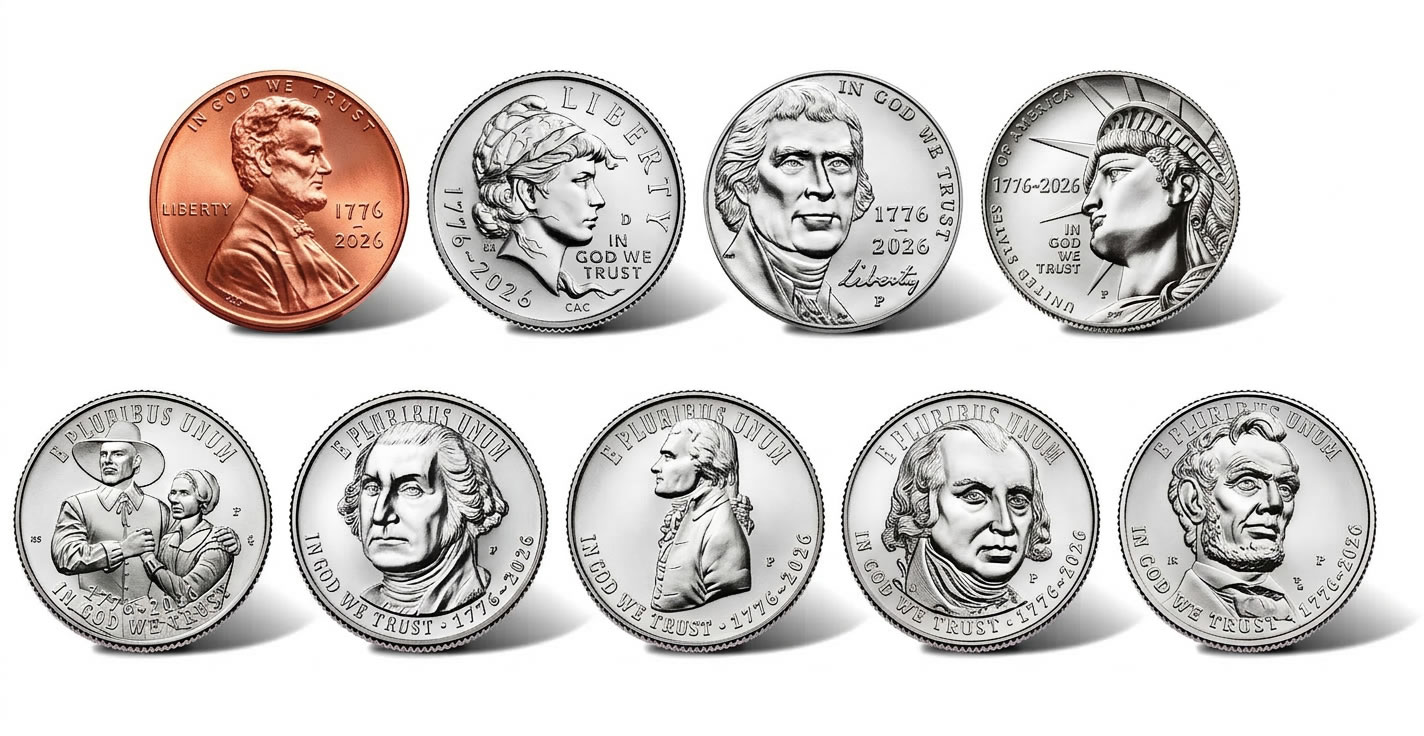
U.S. Mint numismatic gold coins are sold directly to collectors at a premium and are not released into general circulation.
Follows Trump $1 Coin Design Review
The gold coin proposal comes on the heels of the previously recommended clad 2026 President Trump $1 designs, which were considered as part of the Mint’s broader Semiquincentennial lineup. The dollar would have a golden color, sharing the same manganese-brass clad composition and dimensions as the earlier Sacagawea dollar and the newer, non-circulating Native American and American Innovation dollars sold directly by the Mint to collectors.
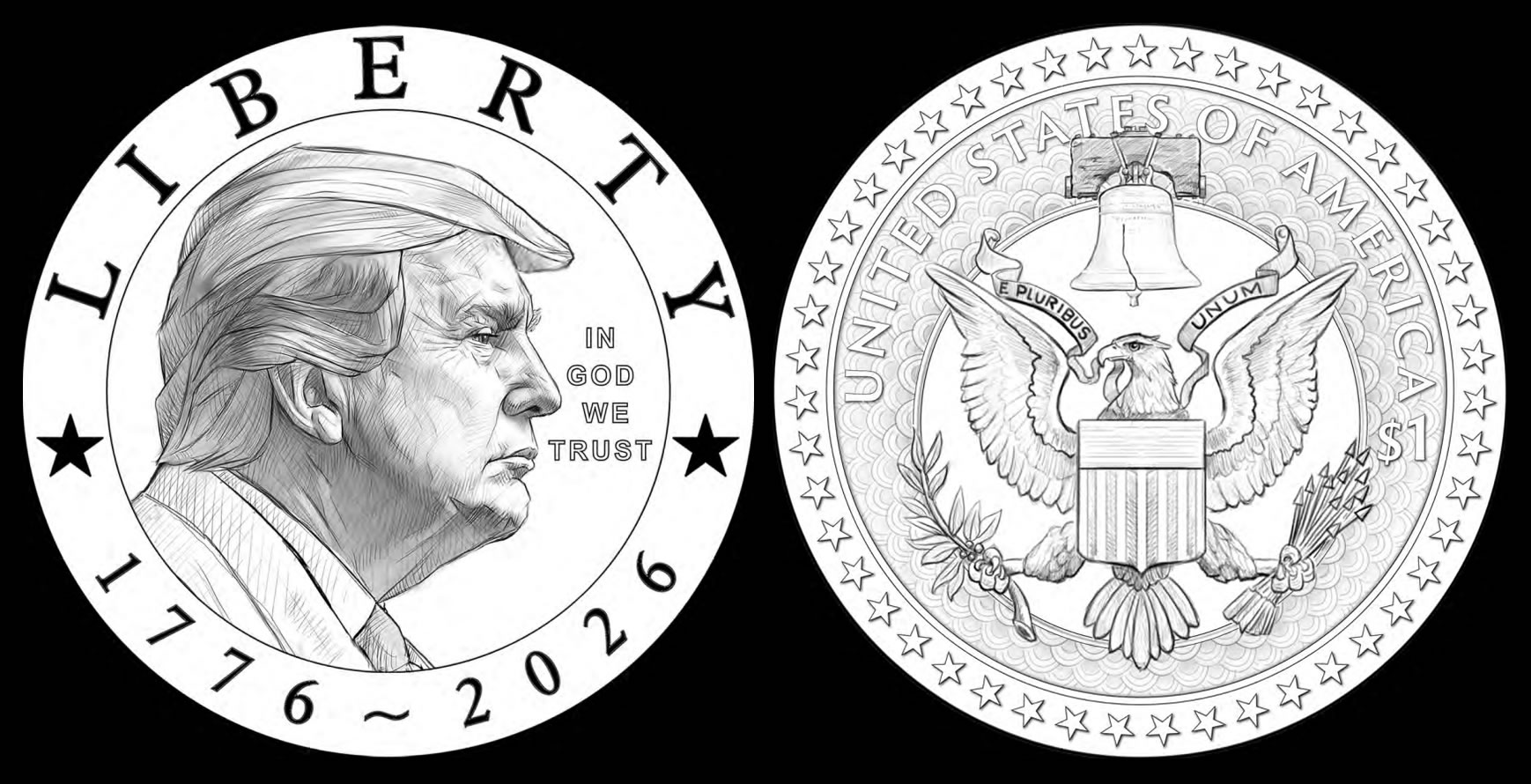
The Citizens Coinage Advisory Committee (CCAC), another advisory body that reviews and recommends coin designs to the Treasury Secretary, declined to review any designs featuring President Trump.
"On behalf of the majority of my colleagues, I have removed it from the agenda," said acting CCAC chair Donald Scarinci during the CCAC’s Feb. 19 meeting. "For 250 years … with a few controversial exceptions, no nation on Earth has issued coins with the image of a democratically elected leader during the time of their service … Only those nations ruled by Kings or dictators display the image of their sitting ruler on the coins of the realm."
While no final decision has been announced for the clad dollar, the two efforts represent separate but related proposals within the same anniversary program.
Legal Framework and Historical Context
Depictions of a sitting president across multiple coin proposals are uncommon in modern U.S. coinage.
Federal law generally limits depictions of living individuals on circulating currency. However, separate authority gives the Treasury Secretary broad discretion over minting gold coins and silver medals.
As for the clad $1 coin, Mint and Treasury legal review found it permissible under the Circulating Collectible Coin Redesign Act of 2020 (Public Law 116-330), which authorizes one-year-only Semiquincentennial coin designs. Under the Act, portraits of living people are prohibited on a design’s reverse, but no such restriction applies to the obverse.
Even before the 2020 Act, a frequently cited precedent is the 1926 Sesquicentennial half dollar featuring President Calvin Coolidge, issued during his time in office.
Details Yet to Be Announced, but Likely Larger Than One Ounce
Key specifications for the proposed gold coin — including denomination, weight, and mintage — have not yet been finalized.
The coin will be part of a "very limited production run," according to Megan Sullivan, acting chief of the Mint’s Office of Design Management. She said, "We are still determining the size of this coin. Given the requested design, we’re looking at planchets larger than our typical 1 ounce gold coin … The largest gold planchet that the Mint has available is 3 inches, so we’re looking somewhere in there."
A launch date has also not been announced.
As with other 2026 issues, additional details are expected as the U.S. Mint continues to finalize its Semiquincentennial product lineup.