Coins commemorating 100 years of the world’s largest service club organization, Lions Clubs International, are now available from the United States Mint.
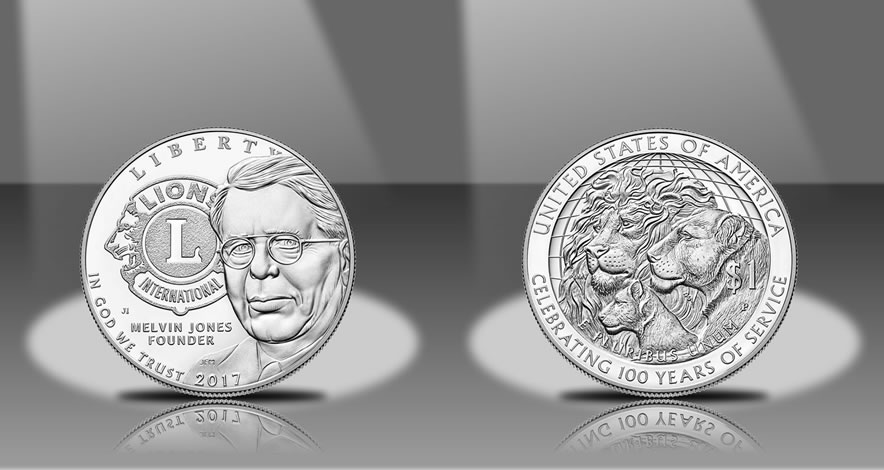
2017 Lions Club Centennial Silver Dollars in collectible proof and uncirculated finishes and at introductory, discounted prices launched today at noon Eastern Time. Each one sold will benefit the Lions Club International Foundation.
LCI (www.LionsClubs.org) was founded in 1917 by Melvin Jones. Today, the organization has a memberships of over 1.4 million and operates from 46,000-plus clubs throughout the world. Humanitarian projects served by the organization include SightFirst, disability and youth programs.
Silver Dollar Designs
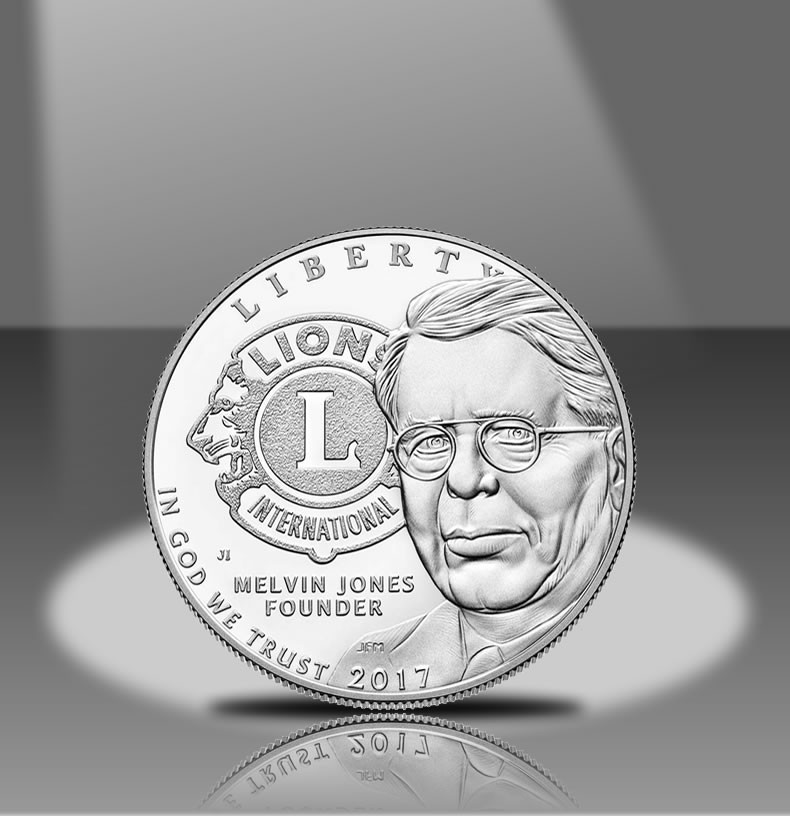
For the silver dollar’s obverse or heads side design, 14 candidates competed against each other. Each of them depicted Lions Club Founder Melvin Jones in varying perspectives. The winning design, created by Joel Iskowitz and sculpted by Joseph Menna, shows Jones along with the club’s logo.
Twenty-one different candidates were presented as possible options for the coin’s reverse or tails side. The selected design depicts a male and female lion with a lion cub superimposed over a globe. Patricia Lucas-Morris created the artwork and Don Everhart sculpted it.
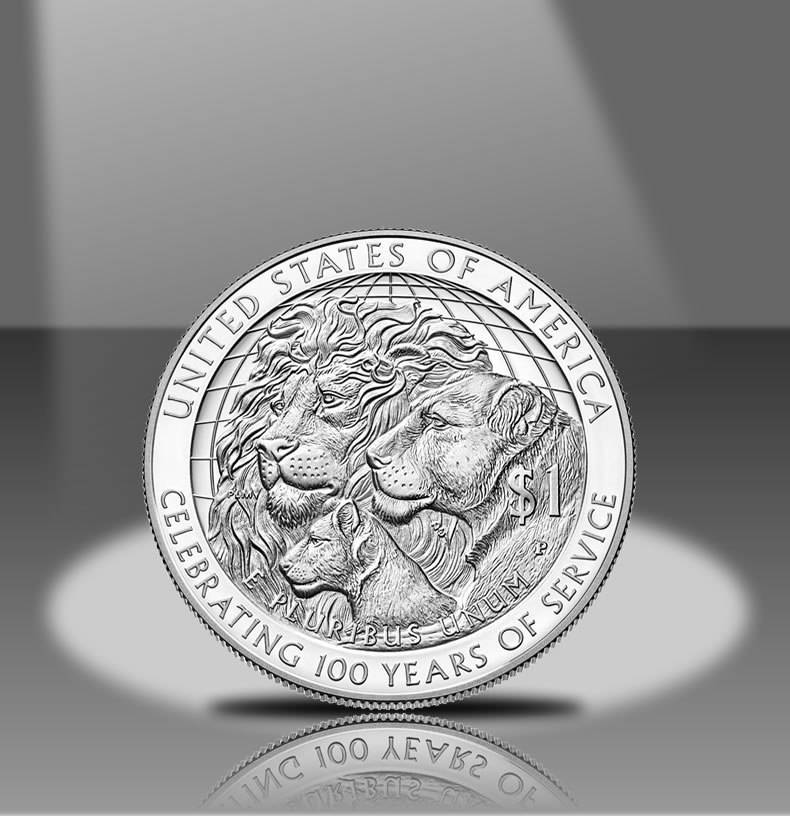
Both coins are produced at the U.S. Mint facility in Philadelphia to a composition of 90% silver and 10% copper, with each having a reeded edge, a diameter of 1.500 inches, and weight of 26.730 grams.
Introductory and Regular Prices
Introductory coin prices of $46.95 for the uncirculated and $47.95 for the proof are available until 3:00 p.m. Feb. 21 when regular pricing kicks in at $51.95 and $52.95.
Ordering
Place orders using the U.S. Mint’s commemorative coin page or by calling 1-800-USA-MINT (872-6468).
Mintage and Surcharges
The mintage is 400,000 for the pair with demand deciding the exact ratio of proof to uncirculated coins.
As directed by Public Law 112-181, silver dollar prices include a $10 surcharge for the Foundation to: (1) further its programs for the blind and visually impaired in the United States and abroad; (2) invest in adaptive technologies for the disabled; and (3) invest in youth and those affected by a major disasters.