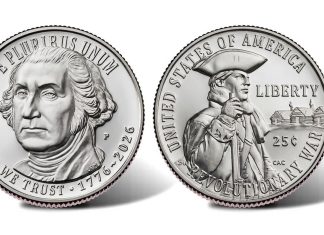
The United States Mint has unveiled images of the 2024 Native American $1 Coin, featuring a design that honors Mary Mary Kawena Pukui – a scholar, author, composer, dancer, educator, and the first Native Hawaiian recognized in the dollar program.
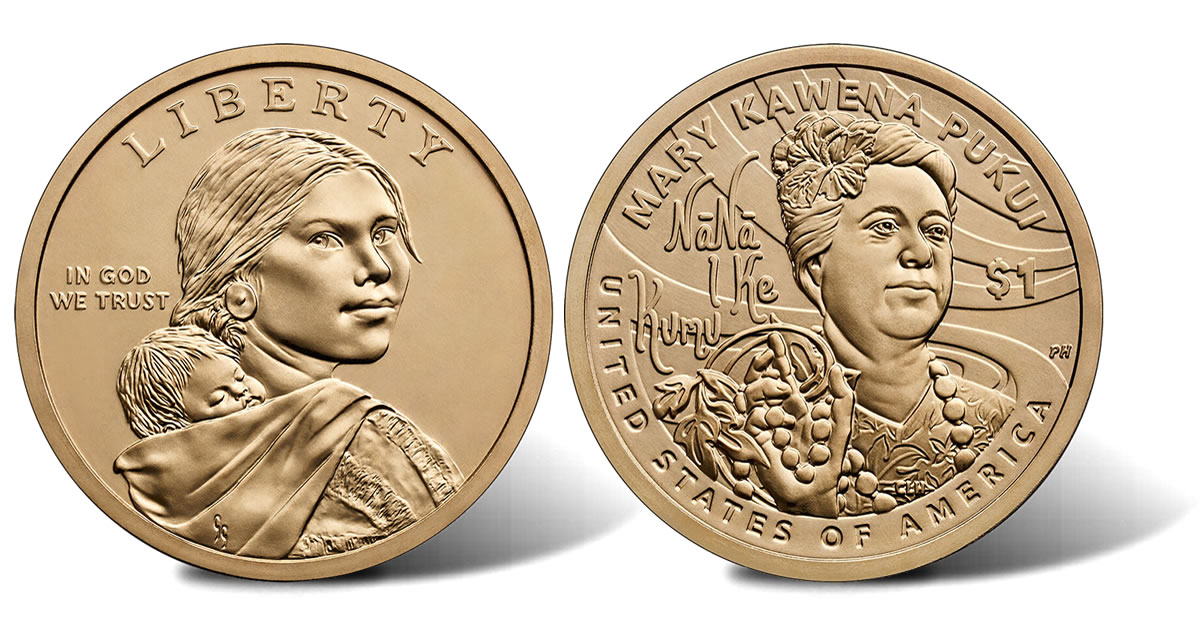
Native American dollars feature annually changing reverses that highlight contributions of Native American tribes and individuals to the history and development of the United States.
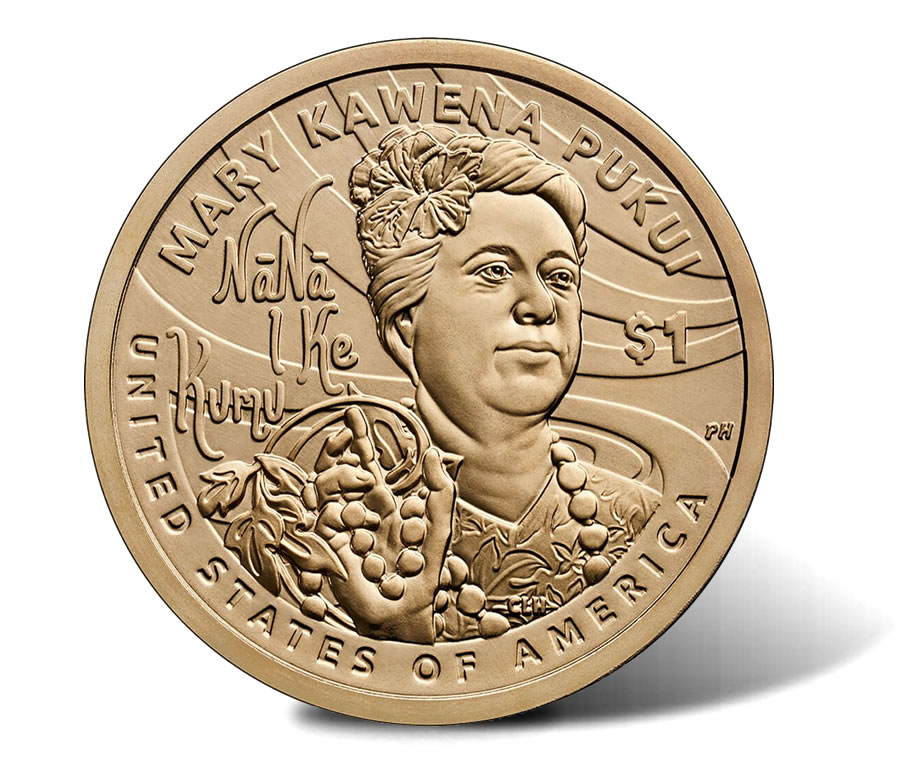
The 2025 dollar’s reverse, designed and sculpted by U.S. Mint Medallic Artist Phebe Hemphill, depicts Mary Kawena Pukui wearing a hibiscus flower, a kukui nut lei, and a muʻumuʻu adorned with an aloha print. Stylized water elements are featured in the background.
Encircling the design are the inscriptions "UNITED STATES OF AMERICA," "$1," and "Nānā I Ke Kumu," which translates to "Look to the Source." Nānā I Ke Kumu is also the title of a series of books Pukui co-authored with the Queen Liliʻuokalani Children’s Center.
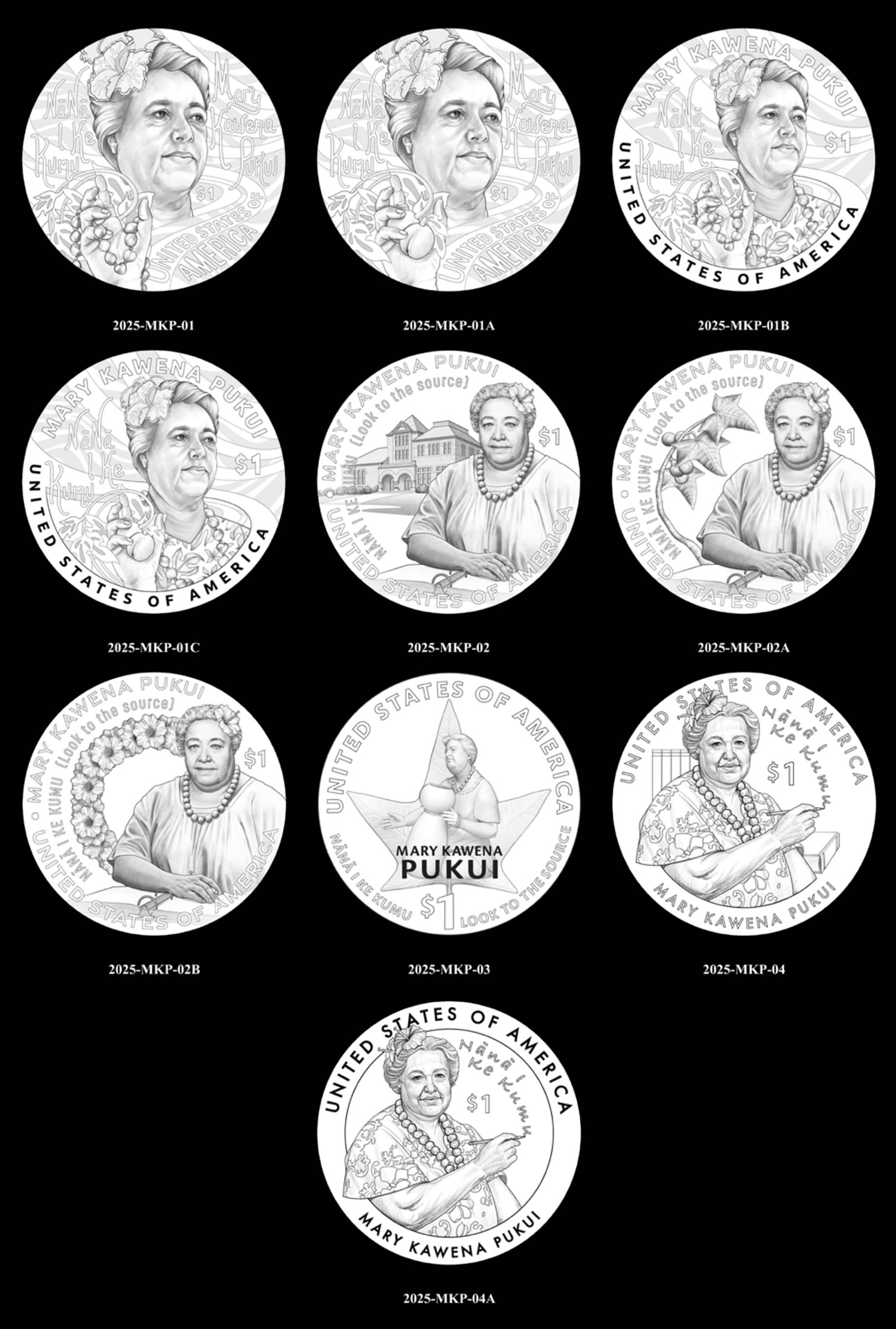
The design was chosen from among 10 candidates reviewed by Citizens Coinage Advisory Committee (CCAC) and the Commission of Fine Arts (CFA), and the preferences of Pukui’s family.
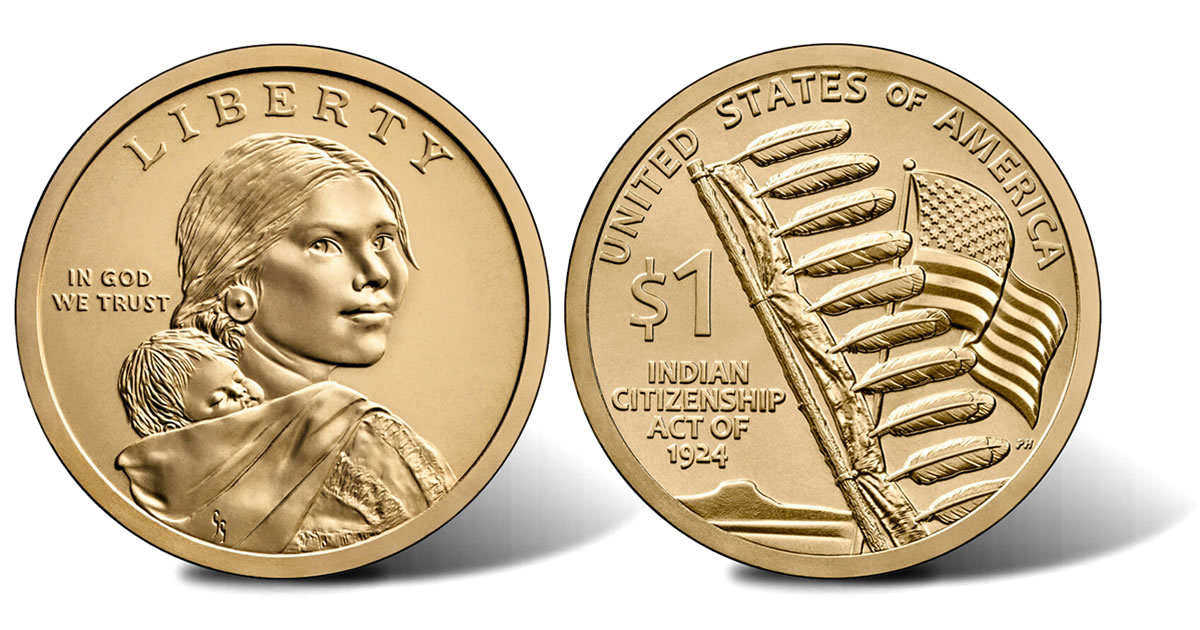
Authorized under Public Law 110-82 and introduced in 2009, the U.S. Mint’s Native American $1 Coin Program has highlighted the following themes:
- 2009: Three Sisters agriculture
- 2010: Great Tree of Peace and the Iroquois Confederacy
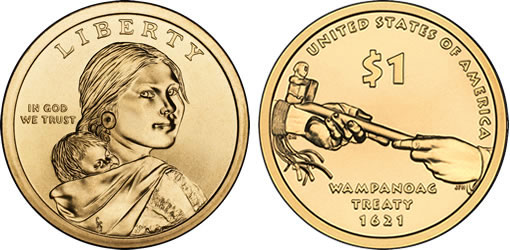
- 2011: Great Wampanoag Nation
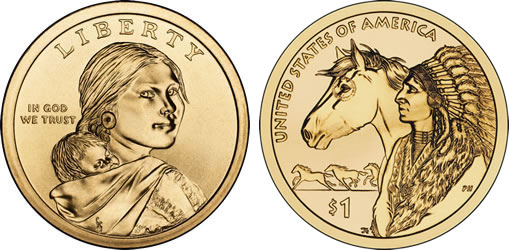
- 2012: Trade routes
- 2013: Treaty with the Delawares
- 2014: Native hospitality ensured the success of the Lewis and Clark Expedition
- 2015: Contributions of the Kahnawake Mohawk and Mohawk Akwesasne communities to high iron construction work
- 2016: Contributions of Native American code talkers in World War I and World War II
- 2017: Sequoyah, inventor of the Cherokee syllabary
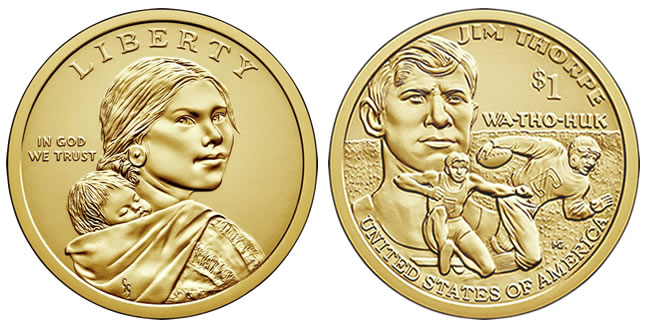
- 2018: Sports legend Jim Thorpe, a member of the Sac and Fox tribe
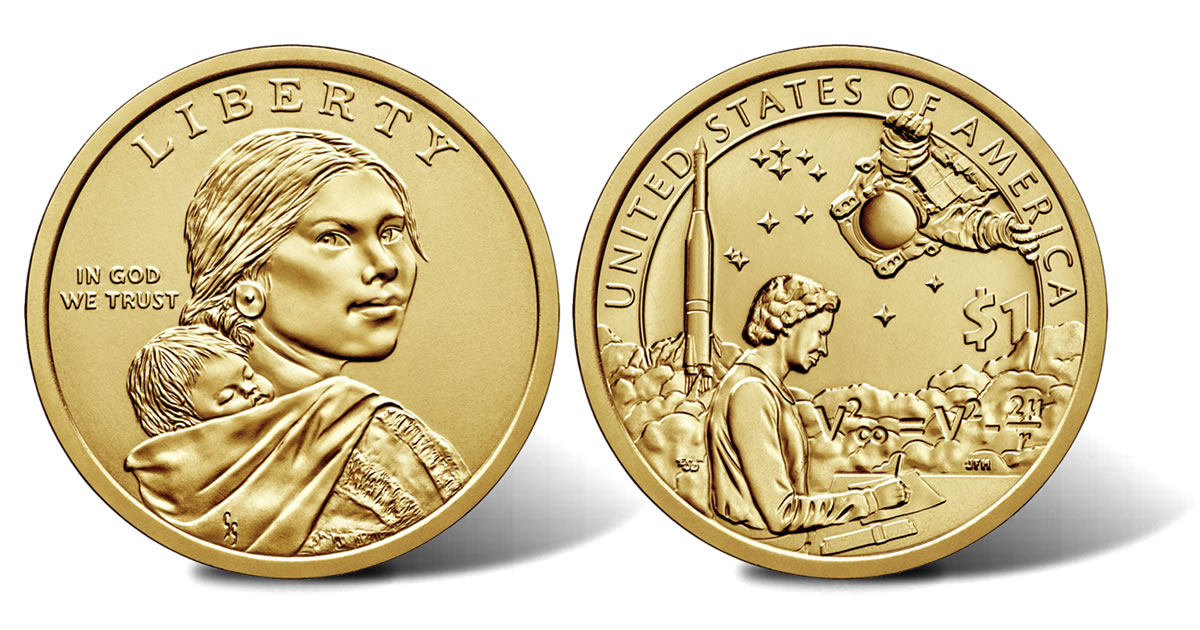
- 2019: Mary Golda Ross, the first known Native American female engineer, and a space-walking astronaut representing Native American astronauts
- 2020: Elizabeth Peratrovich for her role in the 1945 Anti-Discrimination Law passed by the Alaskan territorial government
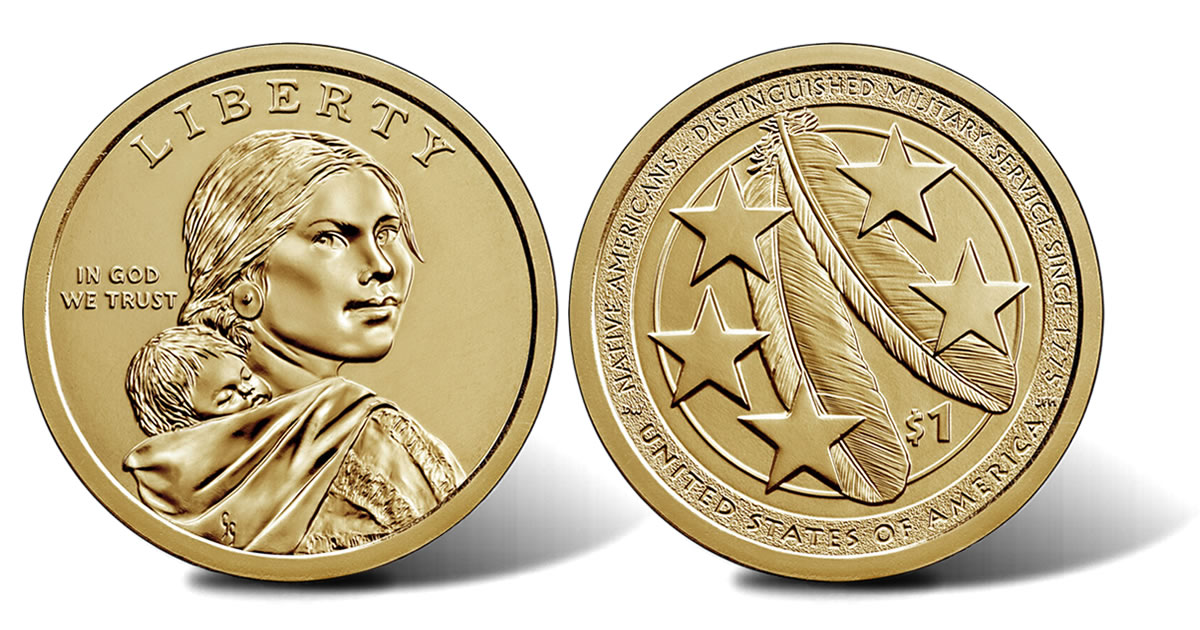
- 2021: Honoring the service of American Indians in the U.S. military
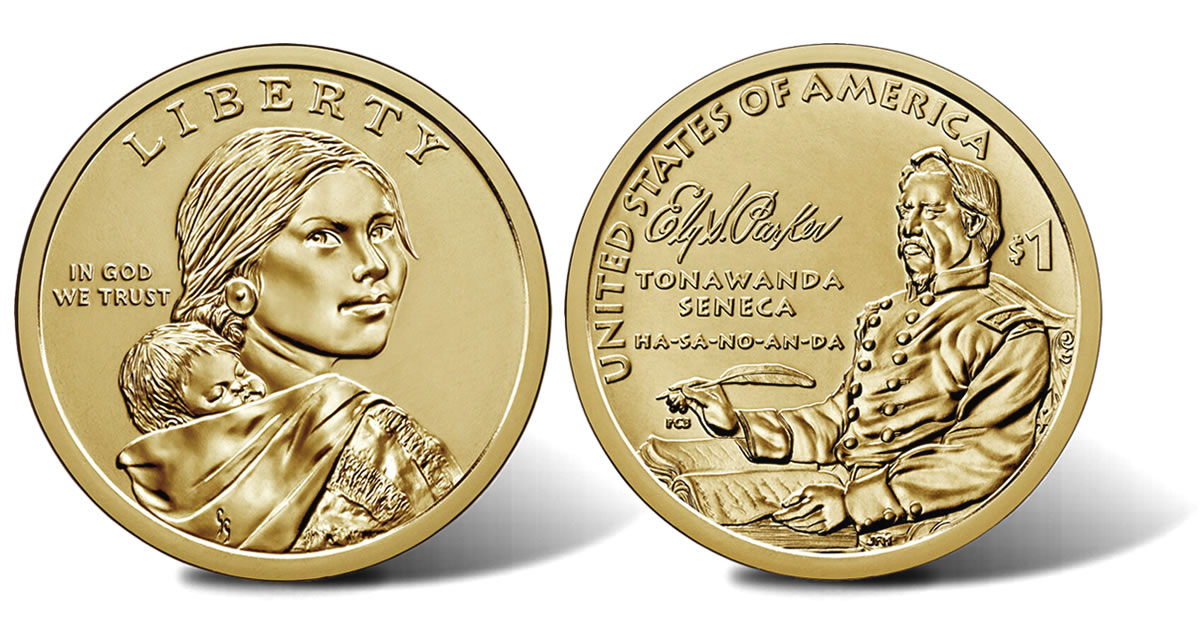
- 2022: Ely Samuel Parker, a U.S. Army officer, engineer, and tribal diplomat
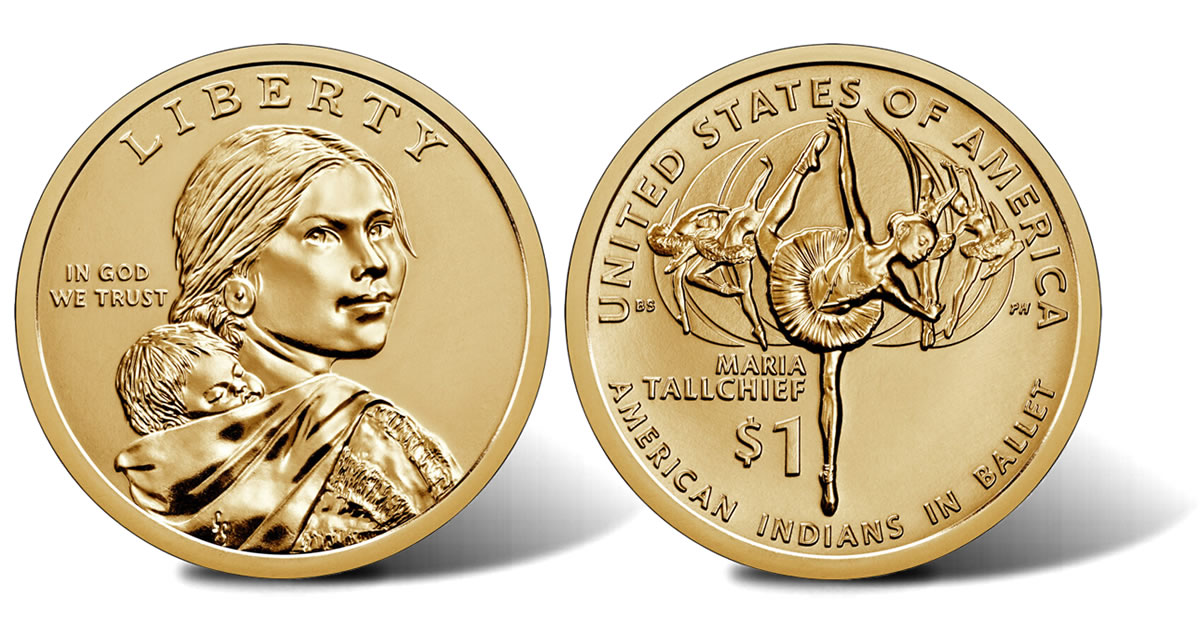
- 2023: Ballerina Maria Tallchief and American Indians in ballet
 |
 |
 |
 |
 |
 |
 |
 |
 |
 |
 |
 |
 |
 |
 |
 |
Common Obverse Design
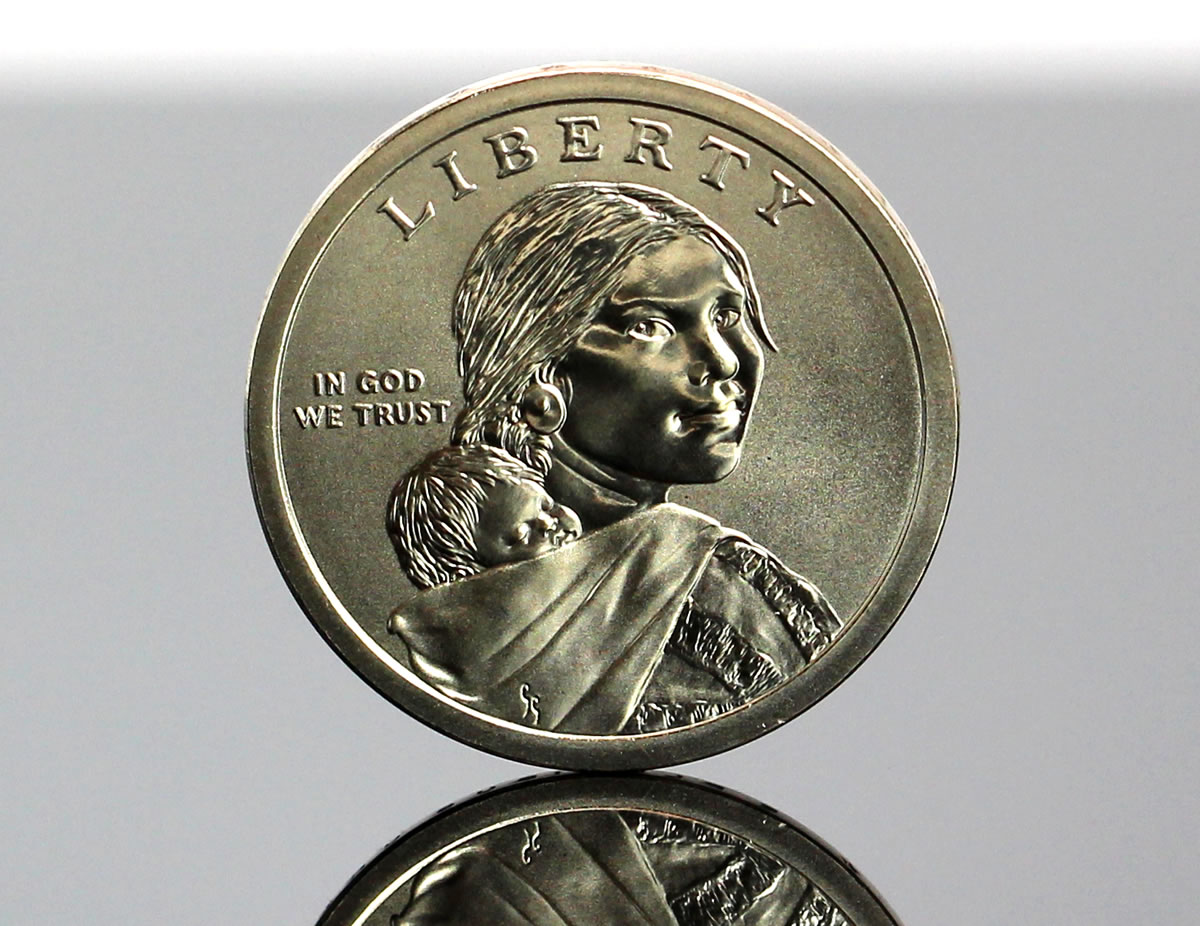
Obverses (heads side) of Native American $1 Coins share the same portrait of "Sacagawea" as designed by sculptor Glenna Goodacre. The familiar image has been around since the Sacagawea golden dollar debuted in 2000. Inscriptions around Sacagawea read LIBERTY and IN GOD WE TRUST.
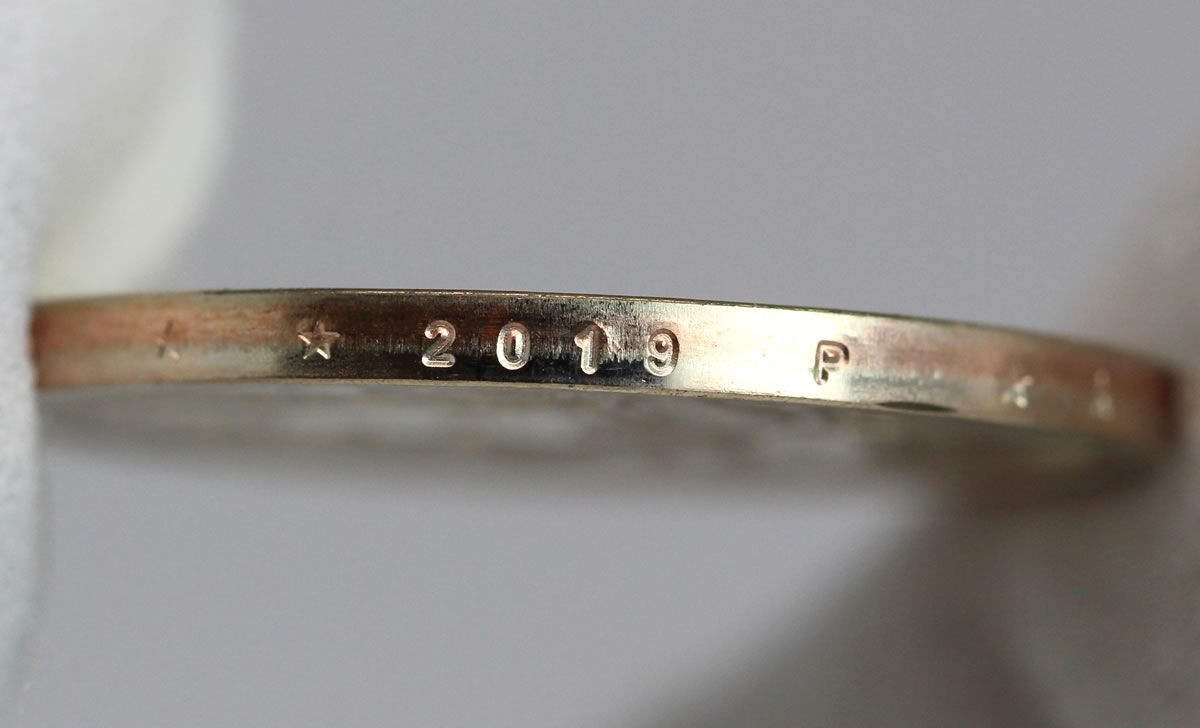
An edge inscription indicates the year of issue, mint mark, and the motto "E PLURIBUS UNUM."
Upcoming U.S. Mint 2025 Dollar Products
Native American dollars have not been released into circulation since 2011. The U.S. Mint now produces them exclusively for numismatic products sold here.
The first 2025-dated Native American dollars will be available for order starting Jan. 28. Options will include 25-coin rolls, 100-coin bags, and 250-coin boxes, all containing circulating-quality dollars struck at the U.S. Mint facilities in Denver and Philadelphia.