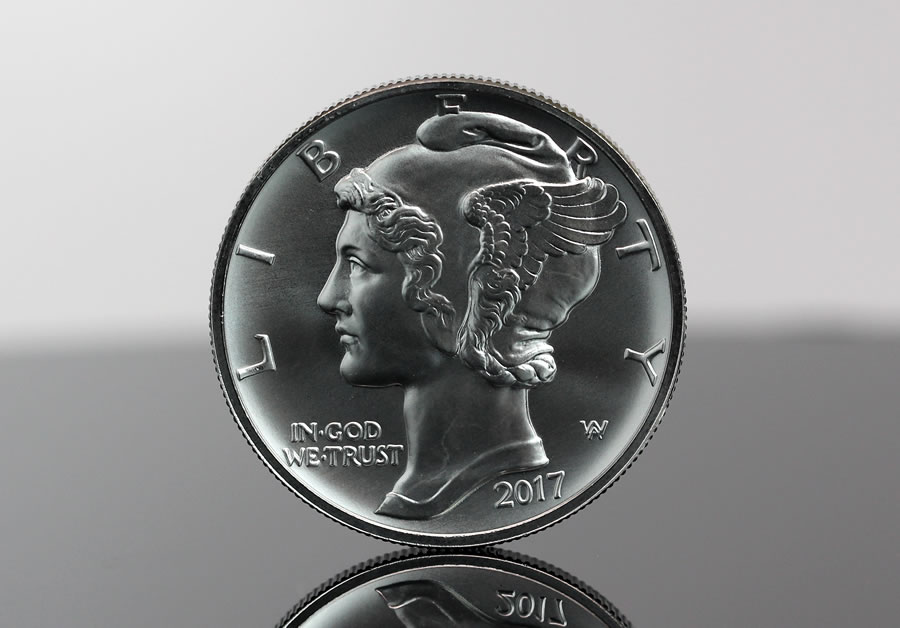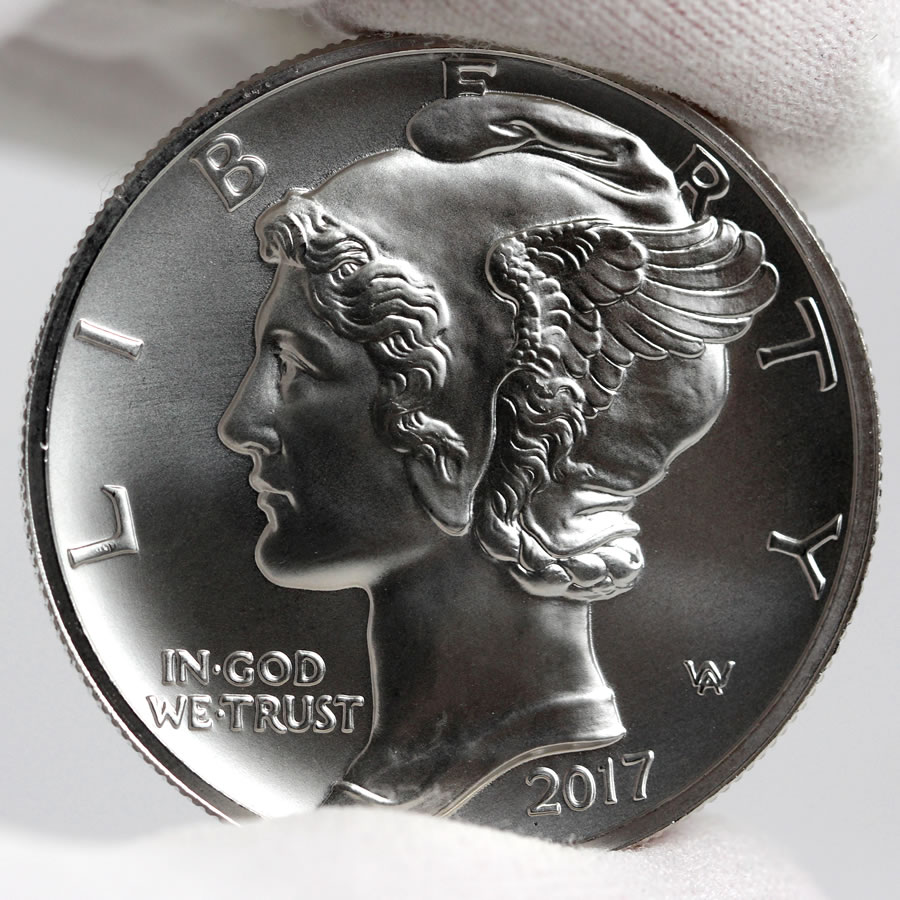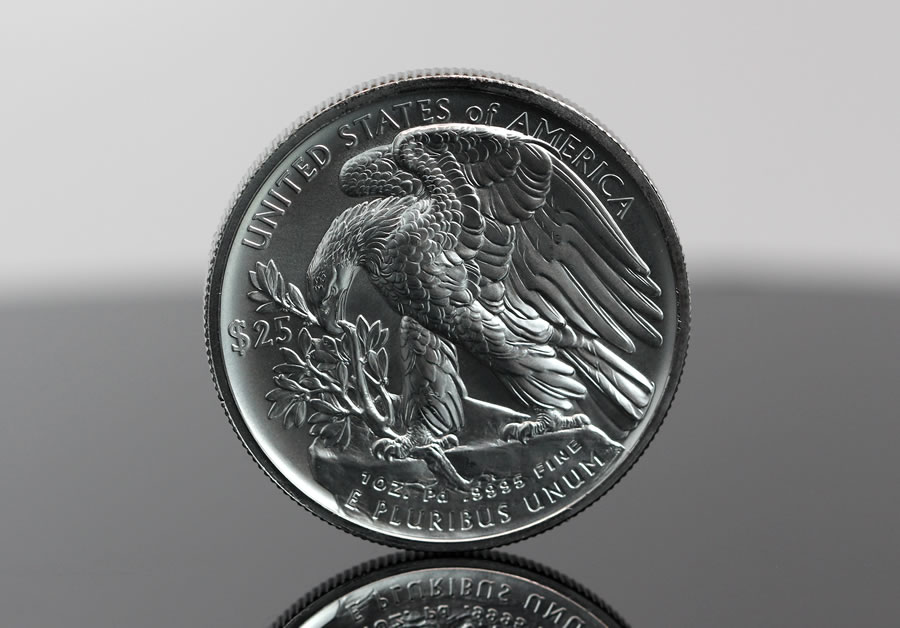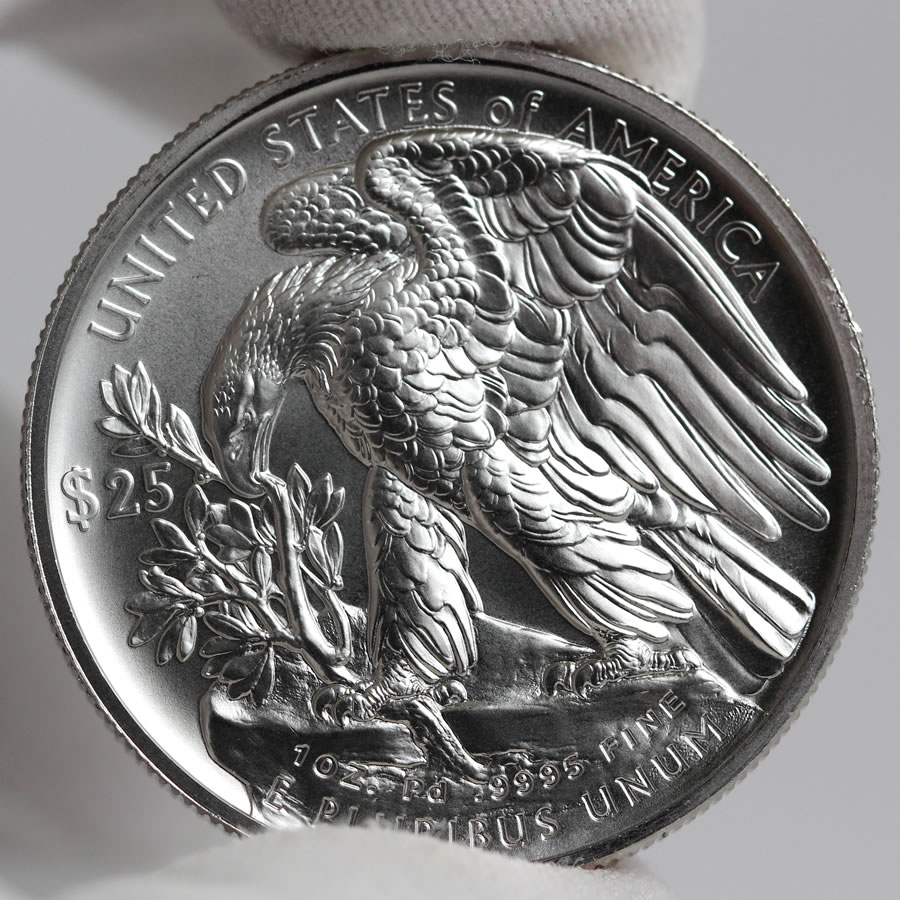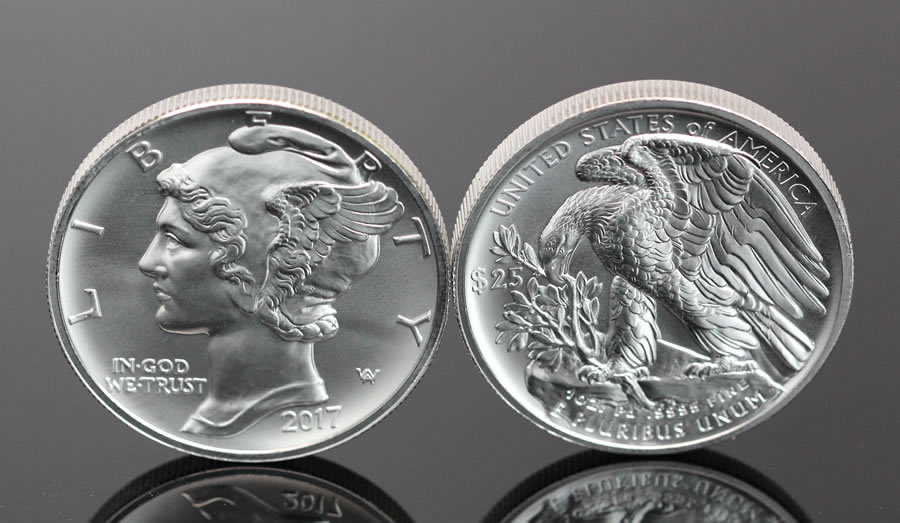
This article presents a short CoinNews video and a few photos of 2017 $25 American Palladium Eagles, the United States Mint’s first issues from its new series of 1-troy ounce .9995 fine palladium bullion coins.
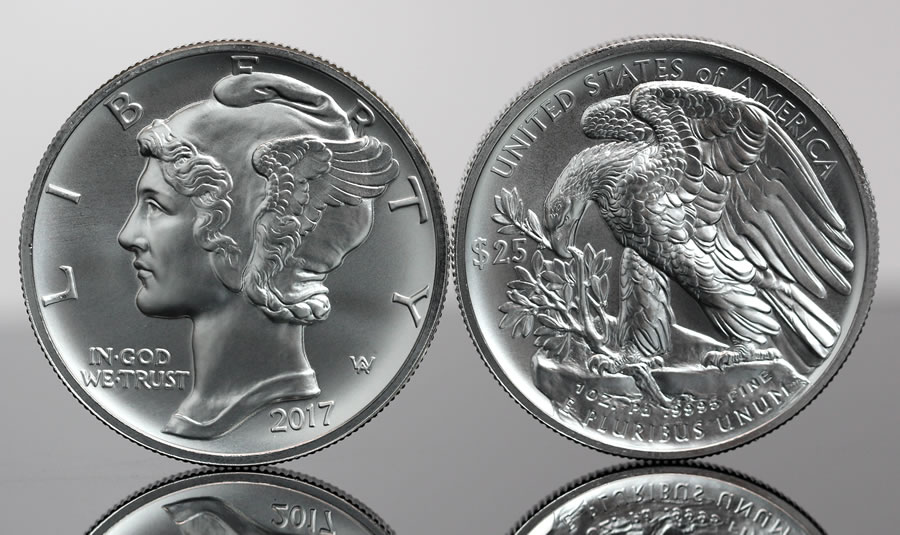
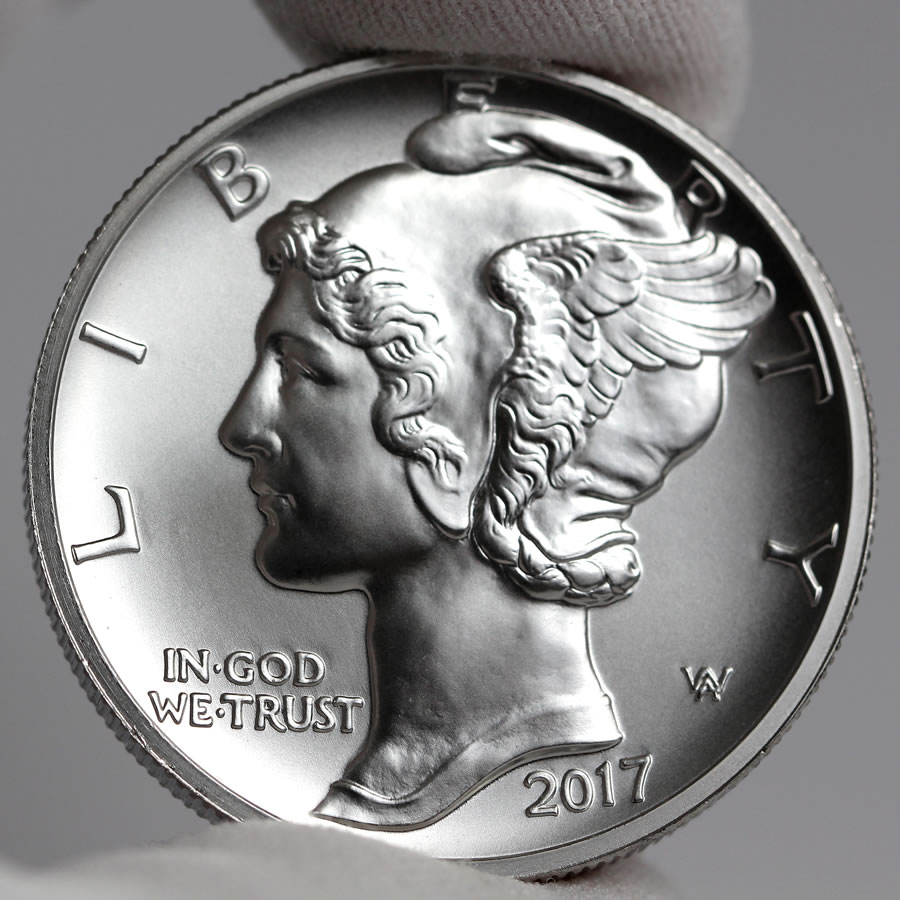
The Palladium Eagle’s obverse (heads side) image is a high-relief adaptation of the "Winged Liberty" design executed for the 1916 dime by American sculptor and medallic artist Adolph A. Weinman. Those 10-cent pieces were soon dubbed "Mercury dimes" because many mistook the portrait of Lady Liberty with her winged Phrygian cap as the Roman god Mercury. Inscriptions around the design include LIBERTY, IN GOD WE TRUST, 2017, and Weinman’s overlapping ‘AW’ initials.
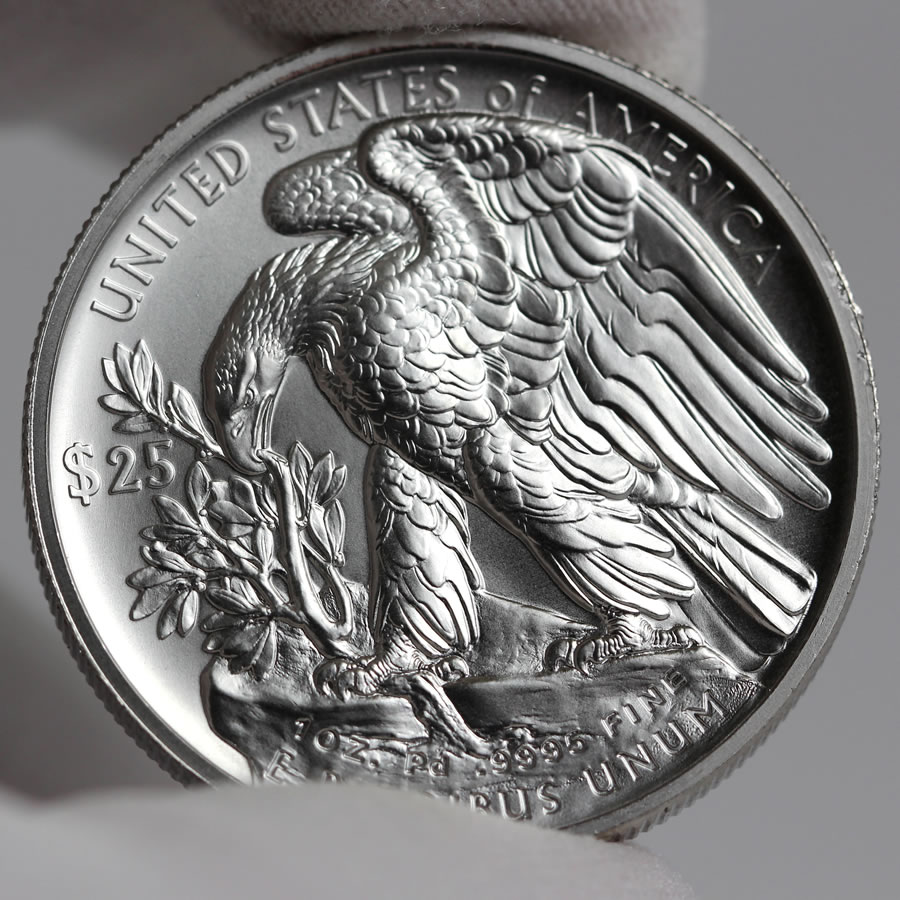
Coin reverses (tails side) feature a high-relief version of the Eagle design for the 1907 American Institute of Architects (AIA) Gold Medal reverse. Weinman also created it. The design was commissioned in late 1906 by the AIA for their Gold Medal award. Inscriptions include UNITED STATES OF AMERICA, $25, E PLURIBUS UNUM, and 1 oz. Pd .9995 FINE for the coin’s weight and fineness. The Palladium Eagle is produced at the Philadelphia Mint but, as with other U.S. Mint bullion coins, it has no mint mark.
Here’s a quick CoinNews video of an American Palladium Eagle rotating, showing both coin sides and the edge:
The AIA was instrumental in helping with the coin’s reverse, giving the U.S. Mint access to a 14-inch diameter plaster for the medal and an actual 1907 2-1/4-inch AIA gold medal. The U.S. Mint digitally scanned the plaster and photographed the medal to aid in their design work. This Mint video shows how the plaster was scanned:
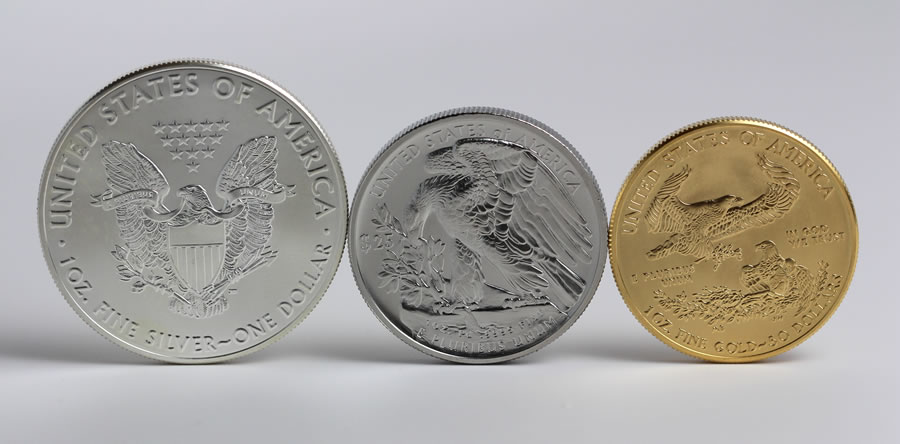
The palladium coin joins three other American Eagle bullion products, the American Silver Eagle, American Gold Eagle and American Platinum Eagle. Its size is nearest the 1 oz. Gold Eagle but none match its thickness.
Here are photos showing Silver, Palladium and Gold Eagles side by side:
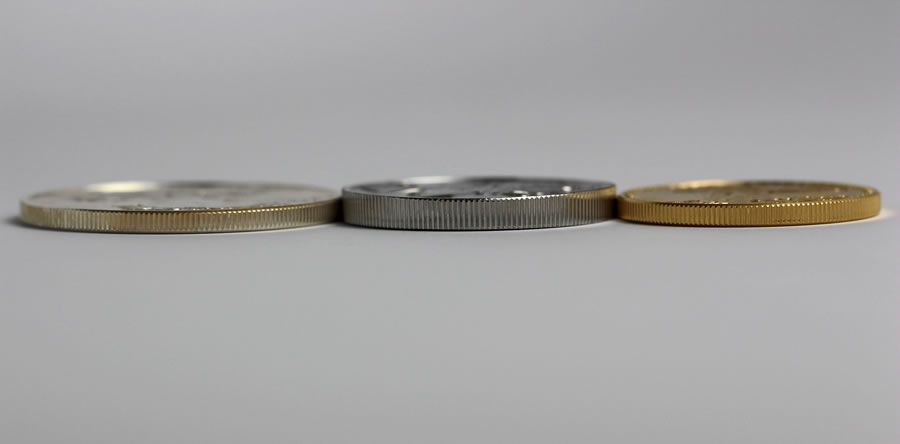
For more comparisons of the same coins in the photos above, this table lists their specifications:
| Gold Eagle | Palladium Eagle | Silver Eagle | |
|---|---|---|---|
| Denomination: | $5; $10; $25; and $50 | $25 | $1 |
| Composition: | .9167 gold; .03 silver; and .0533 copper | .9995 fine palladium | .999 fine silver |
| Weight (troy oz): | 1/10, 1/4, 1/2 and 1 | 1 | 1 |
| Weight (grams): | 3.393; 8.483; 16.966 and 33.931 | 31.1035 | 31.1032 |
| Diameter (mm): | 16.5; 22.0; 27.0; and 32.7 | 32.7 | 40.6 |
| Thickness (mm): | 1.19; 1.83; 2.24; and 2.87 | * | 2.98 |
| Edge: | Reeded | Reeded | Reeded |
| Reverse Designer | Miley Frances Busiek | Adolph A. Weinman | John Mercanti |
| Obverse Designer | Augustus Saint-Gaudens | Adolph A. Weinman | Adolph A. Weinman |
*An official U.S. Mint figure for the Palladium Eagle’s thickness was not available at the time this article was published. The measurement will be updated when it becomes available.
Public Law 111-303 authorized the Secretary of the Treasury to strike and issue palladium bullion coins on an annual basis.
On Sept. 25, 2017, the U.S. Mint kicked off Palladium Eagle bullion sales through its network of bullion distributors, called Authorized Purchasers (AP’s). A week earlier, the agency said it would issue the coins at a 6.25% premium over the prevailing price of palladium and on an allocated basis, noting that it would not offer more in 2017 after depletion of their initial inventory. All available 15,000 coins sold in the first day.
The United States Mint can also produce proof and uncirculated editions for collectors. A proof version is planned for 2018.
In ending, here are several additional CoinNews photos of Palladium Eagles: