 The recent hearing on "The State of U.S. Coins and Currency" by the House Subcommittee on Domestic Monetary Policy and Technology yielded another interesting sub-topic aside from the increased chance for 2010 Silver Eagle proofs previously mentioned on CoinNews.
In fact, this topic proved to be a bit more contentious than the eagles as it invoked a miniature power struggle between the executive branch of the United States and Congress. At the heart of the matter is the makeup of American circulating coinage — its composition.
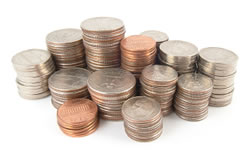
For sometime, Lincoln penny and Jefferson nickel production costs have been higher than their corresponding 1c and 5c face values. In Fiscal Year 2009, the US Mint estimated the cent cost $0.0162 to produce while the nickel ran $0.0603 a piece.
Cost of Producing Circulating Coins – FY 09
| Lincoln Cent | Jefferson Nickel | Roosevelt Dime | Washington Quarter | $1 Coins |
| $0.0162 | $0.603 | $0.0565 | $0.1131 | $0.340 |
The largest factor in this imbalance is attributed to the metal composition of each coin and the cost of attaining those metals.
The cent is struck from a composition of 97.5% Zinc and 2.5% Copper. The nickel is created from 75% copper and 25% nickel. In recent years, these metals prices have spiraled higher and higher creating the interesting problem of the government losing money in producing America’s smallest coins.
"The current situation is unprecedented. Compared to their face values, never before in our Nation’s history has the Government spent as much money to mint and issue coins and, with regard to the one-cent and 5-cent coins, never before has the Nation spent more to mint and issue a circulating coin than its legal tender value," U.S. Mint Director Ed Moy testified. "This problem is needlessly wasting hundreds of millions of dollars."
For years now, the U.S. Mint (through the Treasury Department and ultimately the White House) has been attempting to solve the problem. Their solution, which has been introduced several times, is have Congress extend the authority to the Treasury Secretary to determine the composition of circulating coinage. However, Congress has been reluctant to relinquish this power which was given to it in Article 1, Section 8 of the United States Constitution.
In fact, even before the panel called to testify to the subcommittee was allowed to speak, a few of the committees members stated their position of opposition.
"I oppose the Mint’s current efforts to gain greater power in determining the composition of circulating coinage," stated Representative Ron Paul during the subcommittee hearing. "It is unconstitutional to delegate the determination of the metal content of our coinage to the Secretary of the Treasury."
Paul then addressed the fact that Congress has already given the Treasury Department a portion of this power (as it relates to the dollar coin).
"It is a shame that Congress has already unconstitutionally delegated its coinage authority to the Treasury Department," continued Representative Paul, "but that is no reason to further delegate our power and essentially abdicate Congressional oversight."
Rep. Paul’s position on the matter has been such for several years, going back to at least 2008 when he voiced similar statements during testimony over the Coin Modernization and Taxpayer Savings Act of 2008.
 That legislation eventually passed in the House and would have changed the metallic composition of the penny and 5-cent nickel to a less expensive copper-colored steel. The Senate never took the measure up.
In support of the administration’s position that the Treasury Department be given the power to change all coin compositions as it deemed appropriate, Mint Director Ed Moy’s testimony focused on the fact that such a decision would save taxpayer’s money.
"The Administration proposal expands the Secretary of the Treasury’s authority to determine the weight and composition of the $1 coin to all circulating coinage." stated Moy.
"This approach will fairly and efficiently manage the highly technical evaluations of alternative materials using a transparent, open, deliberative, and market-driven process that will ensure the interests of all those parties that may be affected — be the vending machine operators, coin handling equipment manufacturers, banks, armored carriers, transit officials, or members of the general public — will be considered and appropriately served.
Moreover, the proposal is a durable solution that would ultimately result in significant taxpayer savings by providing to the Secretary of the Treasury the flexibility to respond quickly to changing market conditions."
Moy added: "The Department of the Treasury has decades of proven success in determining the materials for our highest and lowest coin denominations, and now we are proposing to save millions of dollars per year — over one billion dollars in the next 10 years — by determining the materials for the other coin denominations."
Some in the private sector have their opinion on the matter as well. Craig A. Hesch, Chairman, National Automatic Merchandising Association, who was a part of a second panel presenting testimony to the subcommittee, warned that any changes to the composition of circulating coinage could cost the industry millions of dollars. This would mostly be attributed to vending machines that may need reprogramming or refitted to recognize the validity of the new coinage. If such a change were allowed, he recommended that it be limited to the "low value coins such as a penny or nickel."
It would seem the supportable route — at least from the buzz around the hearing — would have the Mint research, test and take on the expense of creating new coin content specifications, and then forward their work on in the form of recommendations to members of Congress who might then introduce legislation calling for new compositions.